Mukah air quality · Sarawak, Malaysia
Clean overnight air is linked to deeper, less interrupted sleep
US AQI 29 (Good) in Mukah, from 1 DOE monitoring station. Main pollutant: PM2.5.
Updated
 Get an alert when Mukah's air changesGet
Pollutants in Mukah
- PM2.5 · µg/m³5.3Under WHO limit
Concentrations averaged across the city's stations. WHO multiples use the 2021 24-hour guidelines.
Is it safe outside in Mukah right now?
Air quality is satisfactory and poses little or no risk.
Walking and commuting
Go aheadEnjoy it.
Running and jogging
Go aheadA great time to run outdoors.
Cycling
Go aheadRide freely.
Children playing outside
Go aheadNo limits.
Older adults and heart or lung conditions
Go aheadNo limits.
Open windows
Go aheadAir out your home.
Mask outdoors
Not neededNot needed.
Air purifier indoors
Not neededNot needed.
Based on the US EPA Air Quality Guide, applied to the current US AQI category. If you have symptoms, follow your doctor's advice.
What US AQI 0–50 means for your health →
Mukah air quality history
Daily average, 70 days- 81average daily US AQI over 70 days
- 202worst day, 22 September
- 23cleanest day, 8 November
- 5days at Unhealthy or worse
The last 7 days averaged 42, worse than the week before (34). 20 of the last 70 days were Good.
Nearby cities
Malaysia rankingRelated reading
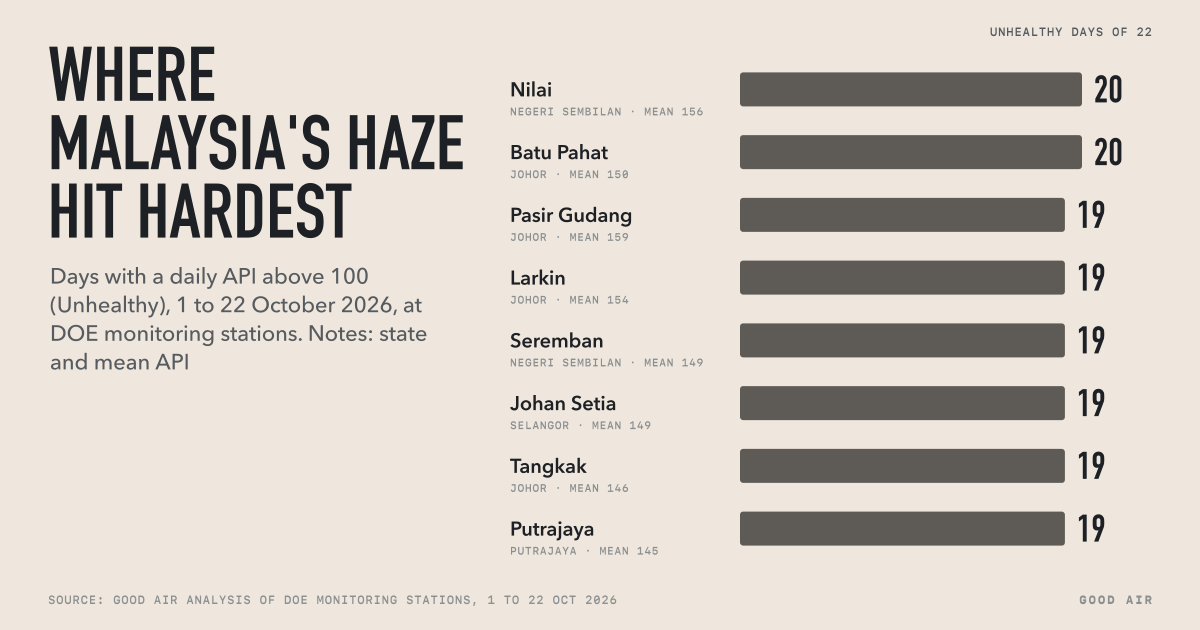 Data storiesMalaysia haze October 2026: Nilai and Batu Pahat were unhealthy on 20 of 22 days, and every Johor station on at least 16
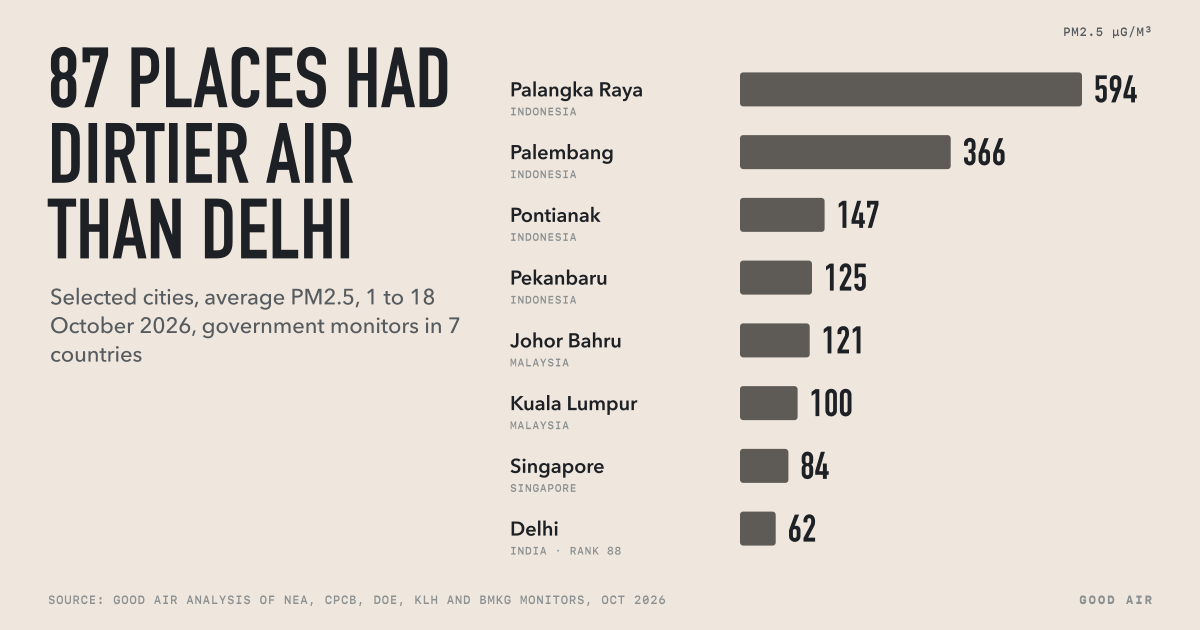 Data stories87 cities had dirtier air than Delhi this October. Most were in Indonesia and Malaysia
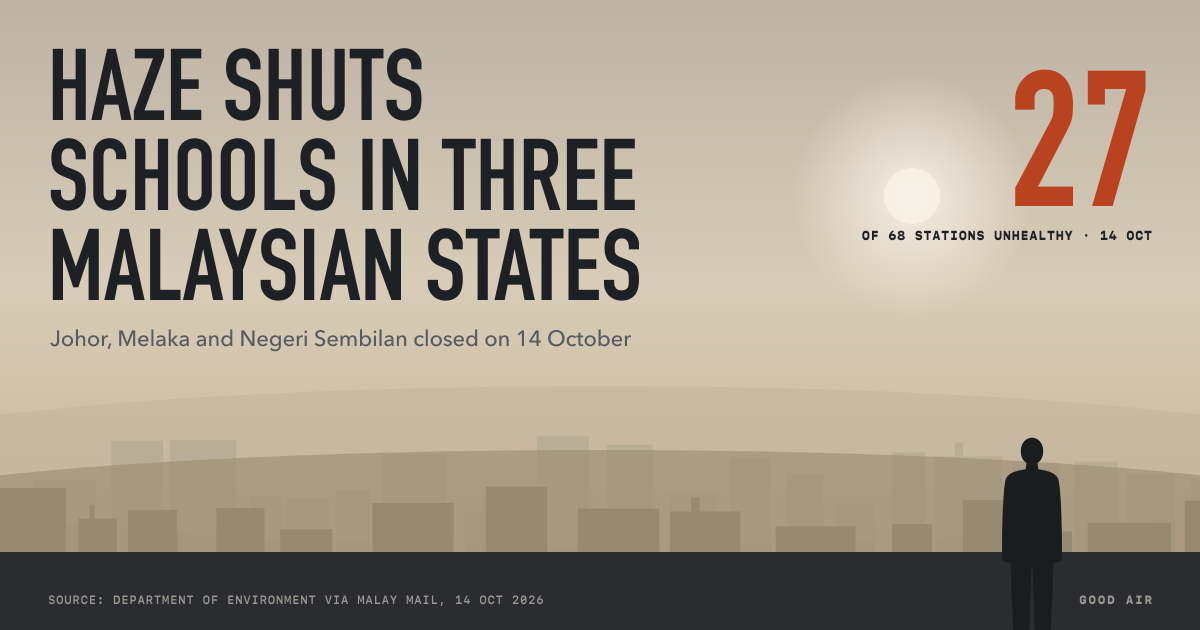 NewsMalaysia haze school closures: which states are shut, and when schools reopen
Mukah air quality: common questions
What is the AQI in Mukah right now?
The US AQI in Mukah is 29 (Good). The main pollutant is PM2.5.
Is it safe to go outside in Mukah today?
A great time to be outside. Air quality is satisfactory and poses little or no risk. For runners: A great time to run outdoors.
How has air quality in Mukah been recently?
Over the last 70 days with data, Mukah averaged US AQI 81. The worst day was 22 September at 202; the cleanest was 8 November at 23. 5 days were at Unhealthy or worse.
Where does Mukah's air quality data come from?
From Department of Environment Malaysia (DOE) · MyEQMS, using 1 monitoring station in and around the city. Good Air does not estimate or adjust these readings.
Source: Department of Environment Malaysia (DOE) · MyEQMS. Readings are published by the monitoring agency and may be revised.