Gujranwala air quality · Pakistan
Postpone everything outdoors that can wait
US AQI 310 (Hazardous) in Gujranwala, from 17 official monitoring stations. Main pollutant: PM2.5.
Updated
 Get an alert when Gujranwala's air changesGet
Pollutants in Gujranwala
- PM2.5 · µg/m³23015.3× WHO limit
Concentrations averaged across the city's stations. WHO multiples use the 2021 24-hour guidelines.
Is it safe outside in Gujranwala right now?
Health warning of emergency conditions: everyone is more likely to be affected.
Walking and commuting
AvoidStay indoors. Postpone non-essential trips.
Running and jogging
AvoidSkip strenuous exercise, even indoors if the air inside is not filtered.
Cycling
AvoidAvoid riding outdoors.
Children playing outside
AvoidKeep children indoors in a room with filtered air.
Older adults and heart or lung conditions
AvoidStay indoors with filtered air and seek care if symptoms appear.
Open windows
AvoidSeal gaps around doors and windows if you can.
Mask outdoors
EssentialN95 or FFP2 mask essential outdoors.
Air purifier indoors
EssentialRun a HEPA purifier on high in a closed room.
Based on the US EPA Air Quality Guide, applied to the current US AQI category. If you have symptoms, follow your doctor's advice.
What US AQI 301–500 means for your health →
Nearby cities
Pakistan rankingRelated reading
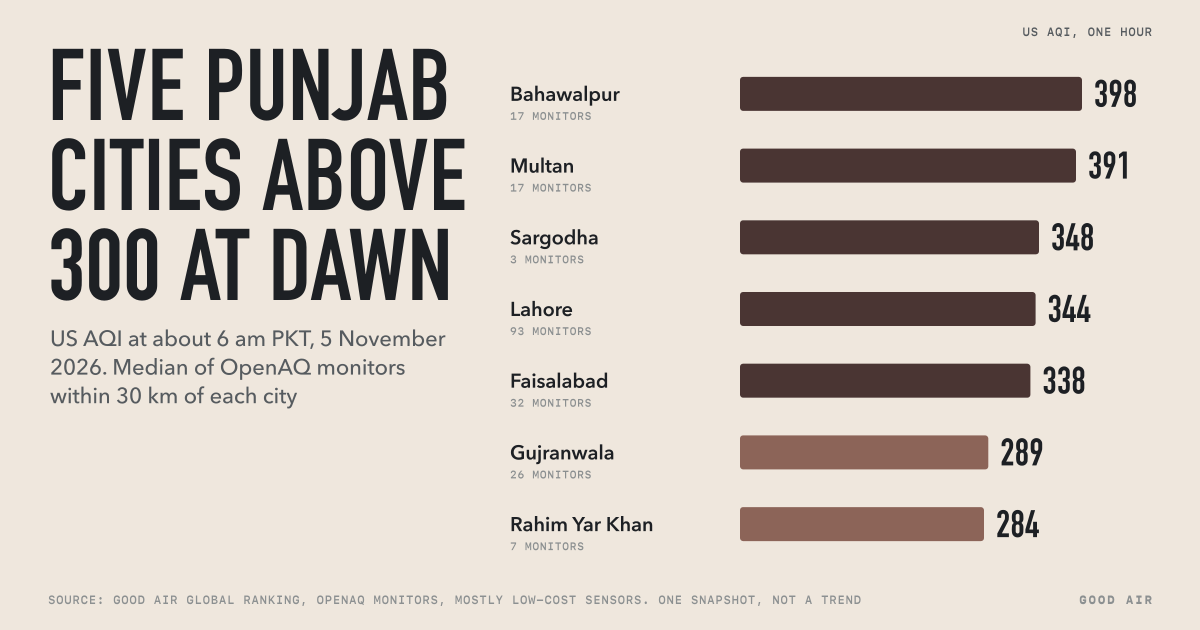
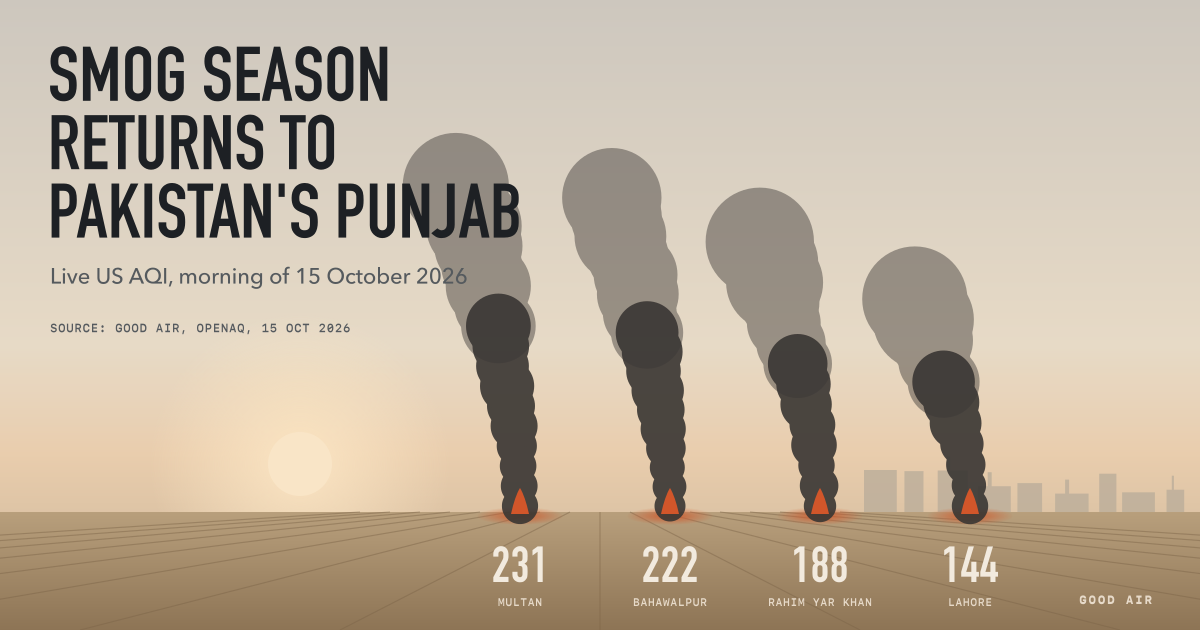
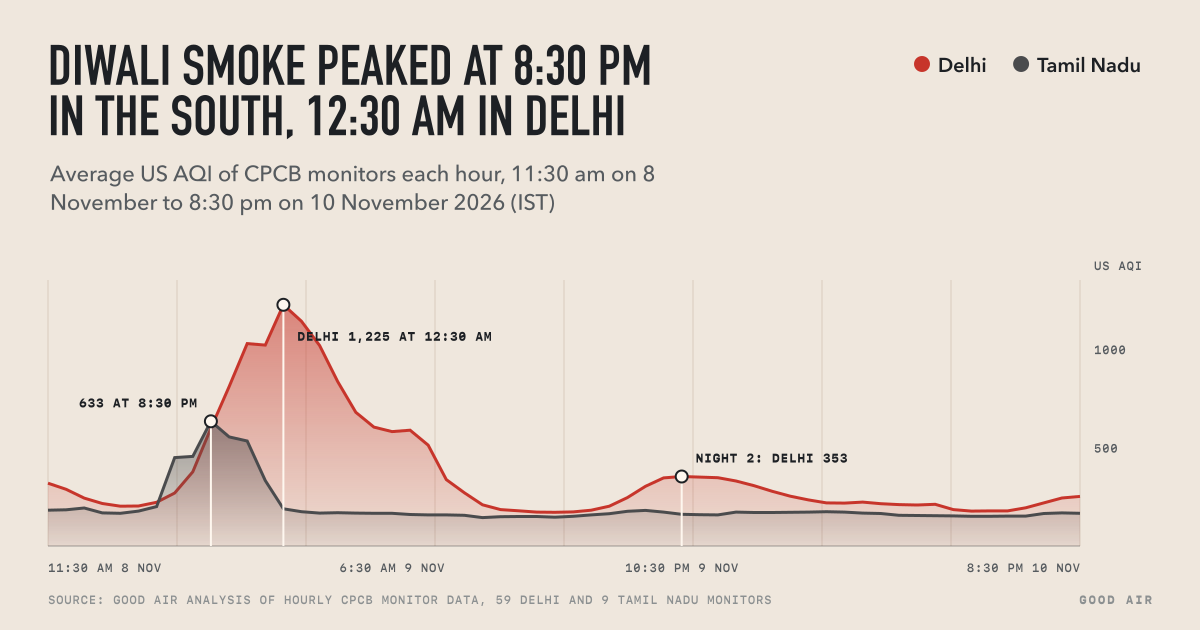
Gujranwala air quality: common questions
What is the AQI in Gujranwala right now?
The US AQI in Gujranwala is 310 (Hazardous), based on 17 monitoring stations. The main pollutant is PM2.5.
Is it safe to go outside in Gujranwala today?
Avoid going outside. Health warning of emergency conditions: everyone is more likely to be affected. For runners: Skip strenuous exercise, even indoors if the air inside is not filtered.
How does Gujranwala's PM2.5 compare with the WHO guideline?
PM2.5 is 230 µg/m³, about 15.3 times the World Health Organization's 24-hour guideline of 15 µg/m³.
Where does Gujranwala's air quality data come from?
From Government and research monitoring stations via OpenAQ and national networks, using 17 monitoring stations in and around the city. Good Air does not estimate or adjust these readings.
Source: Government and research monitoring stations via OpenAQ and national networks. Readings are published by the monitoring agency and may be revised.