Rahim Yar Khan air quality · Pakistan
Even half an hour outdoors in this air can inflame the airways
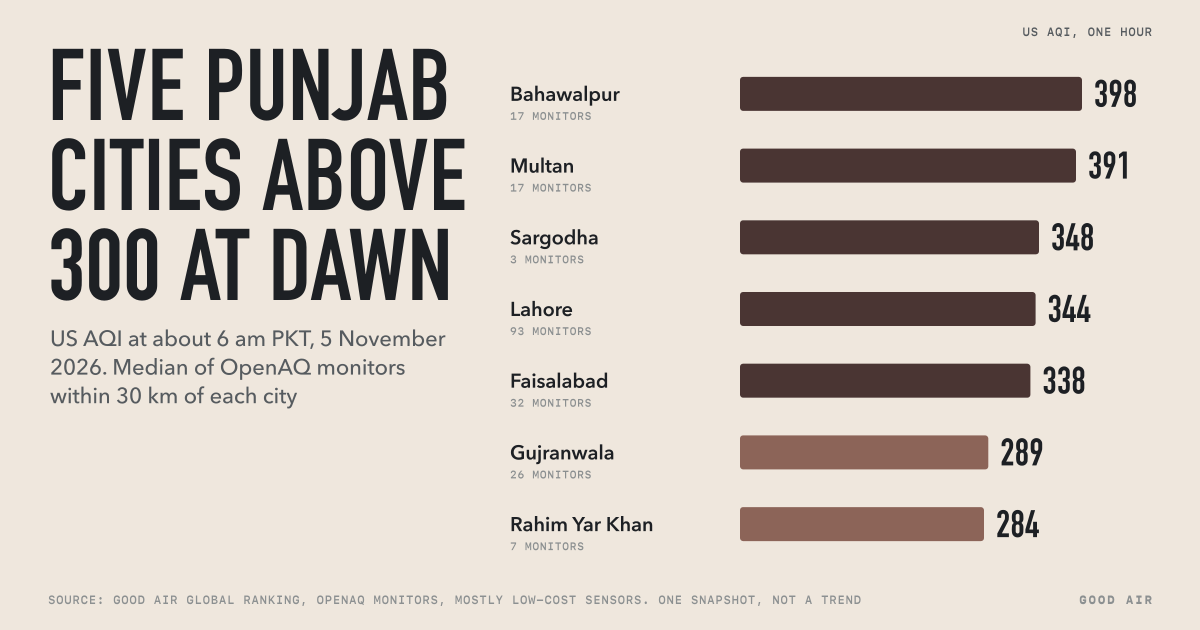
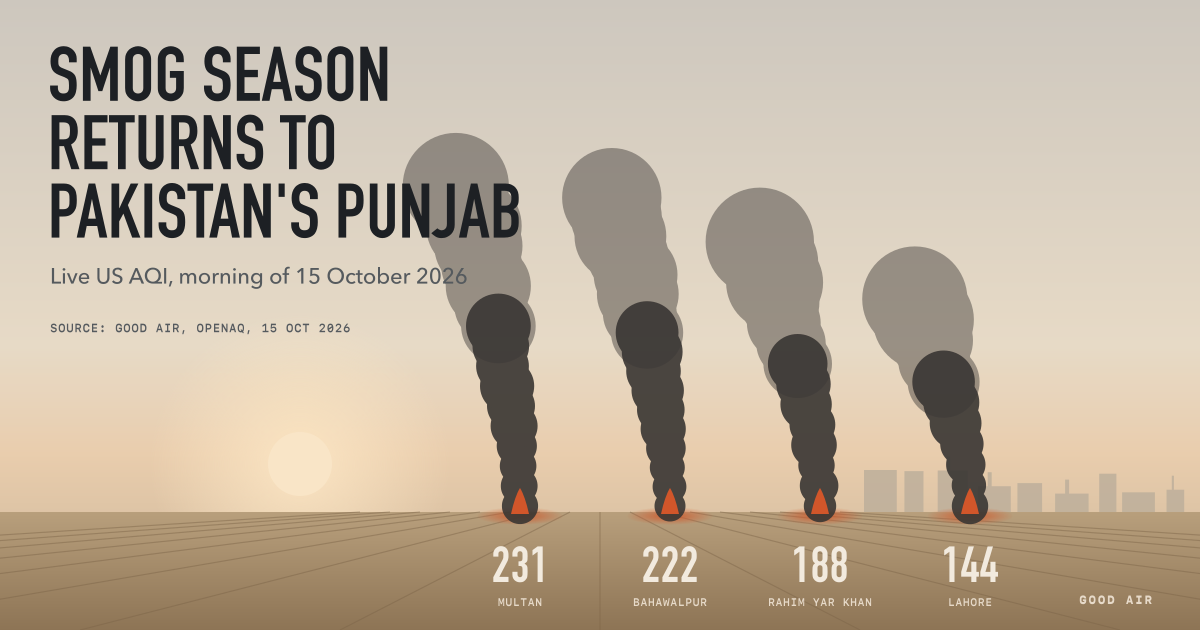
US AQI 205 (Very Unhealthy) in Rahim Yar Khan, from 6 official monitoring stations. Main pollutant: PM2.5.
Updated
 Get an alert when Rahim Yar Khan's air changesGet
Pollutants in Rahim Yar Khan
- PM2.5 · µg/m³1308.7× WHO limit
Concentrations averaged across the city's stations. WHO multiples use the 2021 24-hour guidelines.
Is it safe outside in Rahim Yar Khan right now?
Health alert: the risk of health effects is increased for everyone.
Walking and commuting
LimitOnly essential trips. Wear a well-fitted N95 or FFP2 mask outdoors.
Running and jogging
AvoidRun indoors only, with windows closed.
Cycling
AvoidAvoid riding outdoors.
Children playing outside
AvoidKeep children indoors. Cancel outdoor sports and assemblies.
Older adults and heart or lung conditions
AvoidStay indoors with filtered air.
Open windows
AvoidKeep windows and doors closed.
Mask outdoors
EssentialN95 or FFP2 mask strongly advised for any time outdoors.
Air purifier indoors
EssentialRun a HEPA purifier on high with windows closed.
Based on the US EPA Air Quality Guide, applied to the current US AQI category. If you have symptoms, follow your doctor's advice.
What US AQI 201–300 means for your health →
Nearby cities
Pakistan rankingRelated reading
Rahim Yar Khan air quality: common questions
What is the AQI in Rahim Yar Khan right now?
The US AQI in Rahim Yar Khan is 205 (Very Unhealthy), based on 6 monitoring stations. The main pollutant is PM2.5.
Is it safe to go outside in Rahim Yar Khan today?
Stay indoors where you can. Health alert: the risk of health effects is increased for everyone. For runners: Run indoors only, with windows closed.
How does Rahim Yar Khan's PM2.5 compare with the WHO guideline?
PM2.5 is 130 µg/m³, about 8.7 times the World Health Organization's 24-hour guideline of 15 µg/m³.
Where does Rahim Yar Khan's air quality data come from?
From Government and research monitoring stations via OpenAQ and national networks, using 6 monitoring stations in and around the city. Good Air does not estimate or adjust these readings.
Source: Government and research monitoring stations via OpenAQ and national networks. Readings are published by the monitoring agency and may be revised.